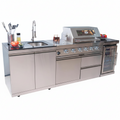
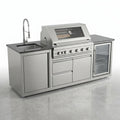
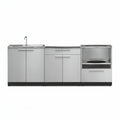
Match heat output and recovery to your service volume and menu.
Plan footprint, fuel or electrical supply, ventilation, and clearances before you buy.
Choose practical grease management and easy-clean surfaces for daily service.
Look for durable commercial construction suited to your kitchen workflow.
Choose the Right Cooking Line
The right equipment starts with your menu, service pattern, and available space. Compare burner and surface configuration, cooking capacity, temperature control, and recovery with the practical requirements of your operation. Confirm gas type or electrical service, ventilation and grease-management needs, installation clearances, and cleaning routines before specifying a unit. Ranges offer flexible pan cooking; griddles provide consistent flat-top contact for breakfast, burgers, and sandwiches; charbroilers add direct-heat searing and grill flavor. Hot plates, stock-pot ranges, and combination units can extend capacity where a full line is not practical.
Commercial Cooking Equipment Questions
Choose equipment around your menu, service volume, available space, and site requirements.
Choose a range when you need flexible pan cooking across multiple burners or an integrated oven. A griddle is suited to foods that need broad, even flat-top contact, such as breakfast items, burgers, and sandwiches. A charbroiler is designed for direct-heat searing and grill-style cooking. Many kitchens combine two or more surfaces to support a varied menu.
Confirm the utilities available at the installation site, including gas type and capacity or the required electrical service. Compare heat response, temperature control, recovery, operating workflow, and energy use for your menu. Always review the product requirements and involve a qualified installer when planning connections, ventilation, and clearances.
Start with peak service volume, menu mix, batch size, and the number of cooks working at once. Consider burner count, griddle dimensions, charbroiler cooking area, pan spacing, and recovery between batches. Measure the available footprint and allow room for safe operation, prep flow, cleaning, and required ventilation.
Look for accessible cooking surfaces, removable or serviceable grease trays where provided, practical splash and crumb management, and finishes that suit your cleaning routine. Follow the product instructions for seasoning, degreasing, and maintenance, and account for daily and periodic cleaning in your kitchen workflow.
Commercial Ranges, Griddles & Charbroilers for Professional Kitchens
Commercial cooking equipment is the working core of restaurants, cafés, hotels, catering kitchens, diners, food trucks, and other professional food-service environments. The right cooking line balances capacity, menu requirements, footprint, utilities, ventilation, energy use, and day-to-day maintenance. Commercial gas and electric ranges provide flexible burner configurations for sautéing, boiling, simmering, and pan cooking. Countertop and floor griddles offer a broad, consistent surface for breakfast service, burgers, sandwiches, and batch cooking. Radiant and lava-rock charbroilers deliver direct heat for searing and grill-style menus, with surface area and grease management matched to service volume. Hot plates and stock-pot ranges add focused cooking capacity where space is limited or large vessels are part of the workflow. Combination units can consolidate functions when a compact line must support a varied menu. Before selecting equipment, review heat output, temperature control and recovery, cooking-surface layout, available kitchen space, gas or electrical requirements, ventilation needs, cleaning access, and durable commercial construction. Product details should always be checked against the installation site's requirements and your operation's workflow.